


“People’s wishes are being disregarded,” criticised Achitz, adding: “They are not sufficiently involved in decisions affecting all areas of life.” Within the framework of the United Nations, Austria is a State Party to the human rights treaty ‘International Covenant on Civil and Political Rights (CCPR)’, which has been in force since 1978. The UN Committee on Economic, Social and Cultural Rights (CESCR) is currently conducting a country review, which also takes into account the Austrian Ombudsman Board and its report.
Lawyers act as adult guardians and place clients in care homes
The Austrian Ombudsman Board repeatedly receives complaints from people with court-appointed adult guardians who report that decisions about their lives are being made without their consent. Ombudsperson Achitz: “For example, the persons concerned have been pressured, against their will and that of their relatives, to give up their homes and move into a care facility. Others report that they are not being provided with sufficient money, medication or medical treatment. This constitutes a massive intrusion into their privacy.” In Vienna, individual law firms provide support for hundreds of people. Personal contact and availability are inadequate. Specialised adult protection associations are unable to support all persons concerned due to limited capacity.
In fact, it is the responsibility of the Laender to ensure that adult guardianship is not necessary in the first place. Legally established support networks, comprising family members, friends and social services, are intended to provide support when decisions are made in all areas of life. “But they are not consistently involved,” criticised Achitz: “According to observations by the Austrian Ombudsman Board, however, there is still a lack of sufficient awareness of self-determination.”
Adult guardians make decisions on medical treatment
Reports from retirement and nursing homes also indicate that, despite the person’s capacity to make decisions, it is often only the adult guardianship that is consulted – for example, regarding medical treatment. Achitz said: “Instead of utilising all the possibilities of Augmentative and Alternative Communication (AAC) to ascertain the wishes of the person concerned, these wishes are overlooked.” The Austrian Ombudsman Board and its commissions are currently conducting a focused review to determine whether Augmentative and Alternative Communication (AAC) is being used in facilities for persons with disabilities. The results will be presented in 2027.
Juvenile detention: Austrian Ombudsman Board calls for better conditions
Section 10 of the Covenant obliges Austria to treat people in detention with respect for their dignity. In the case of adolescents, the enforcement conditions must also be appropriate to their age and specific needs. “However, there is a shortage of staff and space in the juvenile detention system. Adolescents are placed alongside adults, even though the Juvenile Court Act (Jugendgerichtsgesetz) provides for separate placement.” Access to education is also at risk. At the beginning of October 2025, 13 detainees of school age were attending school at the Vienna-Josefstadt Correctional Institution; yet only four teachers were available to teach them in Austria’s largest correctional institution.
Setting the age of criminal responsibility at twelve would place an additional strain on the overburdened system
The Austrian Ombudsman Board has therefore been calling for years for more staff and age-appropriate support with reliable access to education, work, exercise and leisure activities. “Juvenile detention must be geared towards social rehabilitation and comply with the applicable minimum standards. Lowering the age of criminal responsibility would place an additional burden on the already overburdened system,” said Ombudsperson Achitz before the UN Committee.

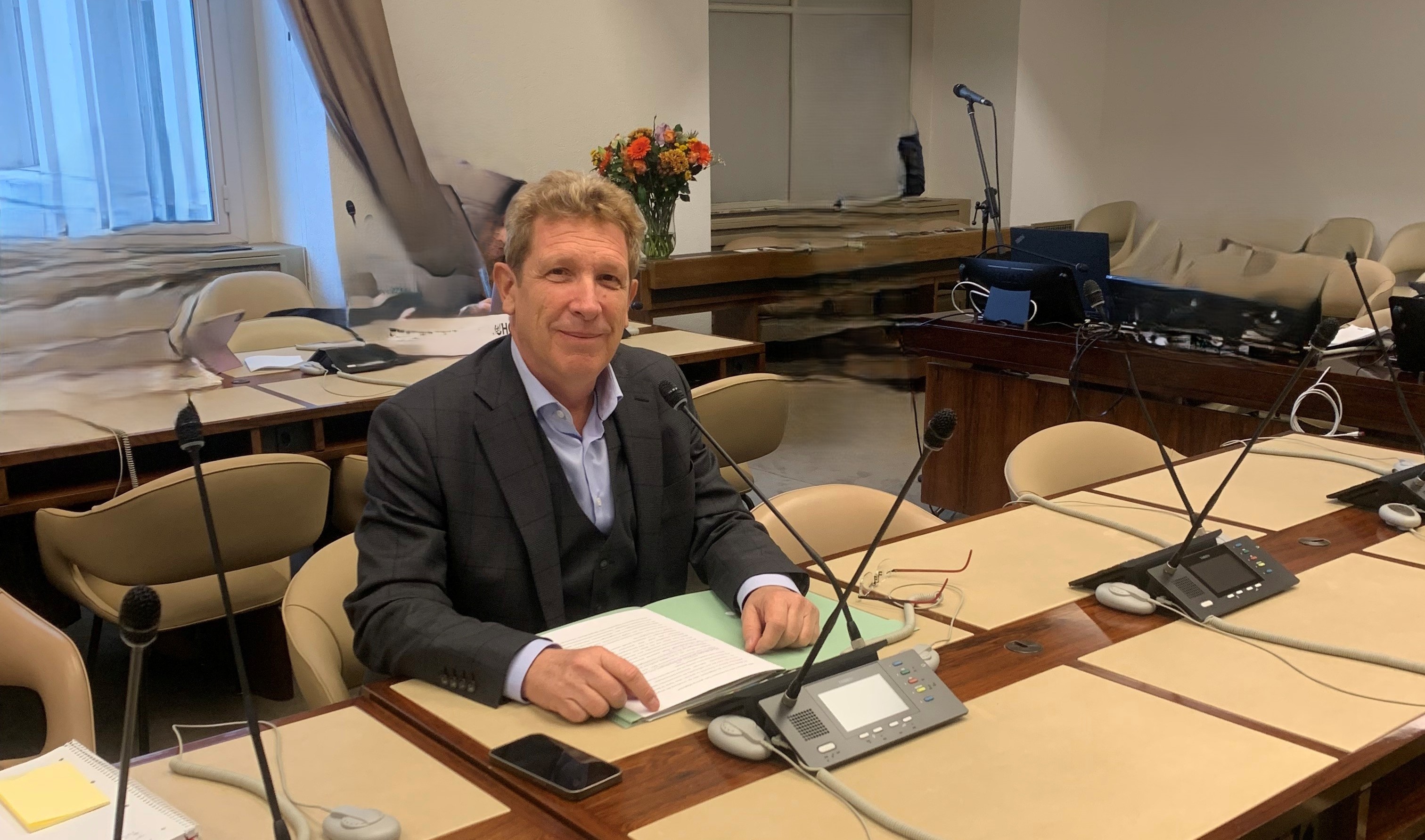 Austria lacks sufficient awareness of self-determination, Ombudsperson Bernhard Achitz told the UN. (Photo: Austrian Ombudsman Board/Ebeling, AI-edited)
