


Karin Maria L. has been unemployed for two years following two serious illnesses. As she receives only 750 euros in unemployment benefit per month, she also receives Vienna’s minimum income support: as a recipient of ‘top-up’ benefits, she receives the difference between her unemployment benefit and the full amount of the minimum income support. When she found a part-time job as a kitchen assistant in October 2025, she immediately reported her income – 300 euros a month – to Vienna’s MA 40, the department responsible for social assistance. She expected that, from that point onwards, her minimum income support would be reduced by 300 euros. However, the authority reacted differently: it simply stopped paying her anything at all.
MA 40’s approach is not in accordance with the law
For months, L. did not receive a single cent. The authority did not even issue a notice regarding the suspension of payments. For Ombudsman Bernhard Achitz, this is completely unacceptable: “MA 40’s approach is not in accordance with the law,” he said on the ORF programme “Bürgeranwalt” on 20 June. A months-long suspension of payments clearly contradicts the purpose of the Vienna Minimum Income Act. Yet MA 40 does this frequently – in 2024 and 2025 alone, in more than 100 cases in total. The Ombudsman’s Office has also reported this to the Vienna State Parliament: https://volksanwaltschaft.gv.at/fileadmin/user_upload/Downloads/Berichte/LT/W/47_Wien_2025_bf.pdf
Karin Maria L.: “Without the children, I wouldn’t have known what to do.”
For Karin Maria L., the suspension of payments posed an existential problem, as in order to receive the minimum income guarantee, one must first have used up all one’s savings. “You can’t just leave people in such a desperate situation without any money; they have to pay for food, electricity and rent,” said Achitz. L. had to ask her son for money to pay the energy bill. Karin Maria L.: “Without the children, I wouldn’t have known what to do.”
Ombudsman Achitz naturally recognises that MA 40 thoroughly checks whether someone meets the eligibility criteria for social benefits such as the Vienna Minimum Income Scheme: “But if someone voluntarily reports straight away that they’re now earning a bit of money, then the authorities could take their word for it for the time being, reduce the minimum income allowance accordingly, and check later, using supporting documents, whether everything is in order.”
Applications must be processed within a maximum of three months
Achitz also criticises the fact that MA 40 often takes far too long to process applications for the Vienna Minimum Income Scheme. The prescribed maximum is three months. “But actually, in most cases it should be much quicker – after all, those affected need the money to survive,” said Achitz. Karin Maria L. also had to wait a very long time for her application for an extension, which she had submitted in February, to be processed. She had tried countless times to contact MA 40 by telephone; at one point, she was told that her application had not even been received by the authority. It was only when the Ombudsman’s Office and the “Citizens’ Advocate” intervened that MA 40 took action – and approved the application it had allegedly never even received. In any case, Karin Maria L. hopes she will soon no longer need to communicate with MA 40 at all – she is expected to be able to return to work in the autumn.
It’s better to communicate with the authorities in writing!
In her mobile phone’s call log, L. showed her many fruitless calls to MA 40. For Ombudsman Achitz, this was reason to offer some general advice: “The telephone is the worst means of communication with public authorities. It’s better to use email, as this allows you to better document, in case of doubt, what was agreed or promised!”
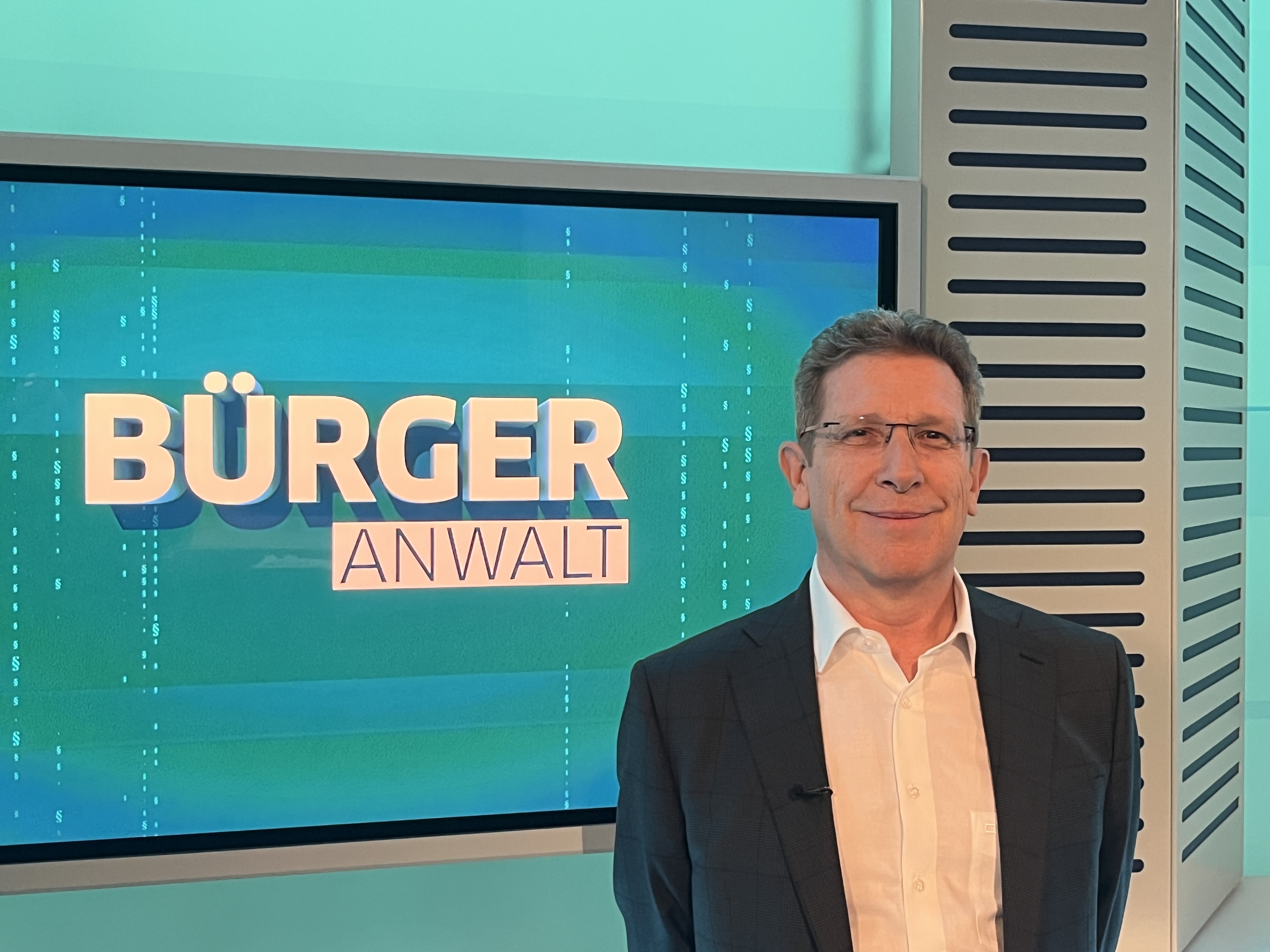 Bernhard Achitz: “The telephone is the worst way to communicate with the authorities. It’s better to use email, as that way you can keep a better record of what was agreed or promised, just in case!”