


Healthcare reform is currently the subject of intense debate. "It is important to focus on those people who are often forgotten in such discussions: Disadvantaged groups such as those affected by poverty, people with disabilities and women, and not least people who are affected by racism in the healthcare system," said Ombudsperson Bernhard Achitz, who moderated the NGO forum on 27 May at the premises of the umbrella organisation of social insurance institutions: "People who belong to several of these groups are particularly affected, because discrimination does not occur in isolation."
Every year, the Austrian Ombudsman Board organises an NGO forum on a specific topic and gives civil society the opportunity to exchange ideas with federal and provincial authorities, social insurance representatives and, of course, politicians. In previous years, for example, the forum focussed on the still overdue anchoring of basic social rights in the constitution and children's rights. The Ombudsman Board has summarised and published the results in conference proceedings: https://volksanwaltschaft.gv.at/berichte/ngo-forum-tagungsbaende/
Lanzinger (ÖBR): UN Convention on the Rights of Persons with Disabilities still not implemented after 18 years
Manuela Lanzinger, Vice President of the Austrian Disability Council (ÖBR), opened the morning with an overview of structural problems faced by people with disabilities in the healthcare sector. To summarise: "Almost everything stated in the UN Convention on the Rights of Persons with Disabilities (UN CRPD) has still not been fulfilled 18 years after ratification," said Lanzinger: "Healthcare is not available at the same level as for other people. Accessibility does not work." For example, an AKH outpatient clinic turned away a person in a wheelchair because there was allegedly no lift available. Lanzinger: "I can't imagine that there isn't a lift to be found in the entire AKH."
Inclusive outpatient clinics
Comprehensive accessibility means more than just wheelchair accessibility: there must also be communicative accessibility, for example rest areas for neurodivergent people, ... "Accessibility must also be checked, the self-disclosure of the facilities is not enough," demanded Lanzinger. Inclusive outpatient clinics are needed - instead, there are currently only a few specialised outpatient clinics that are only aimed at people with very specific disabilities.
Healthcare staff need to be better trained and sensitised to human rights standards, "this only happens to a very limited extent. We were appalled at the stereotypes that still appear in training videos."
Real participation instead of sham participation!
Lanzinger named a number of specific demands to politicians, such as prohibiting discrimination against people with disabilities in the areas of life and health insurance. AAC and sign language interpreting services must be improved, especially for refugees. The provision of psychosocial care is still far from adequate, despite psychotherapy on a sick note. And very importantly, people with disabilities themselves must be involved in all future reforms. At the moment, "some projects give the impression of sham participation: suggestions are listened to, but then it is said that there is no money for them." In addition to budgeting, the data basis also needs to change: "There is too little data, for example on the awarding and rejection of benefits," says Lanzinger.
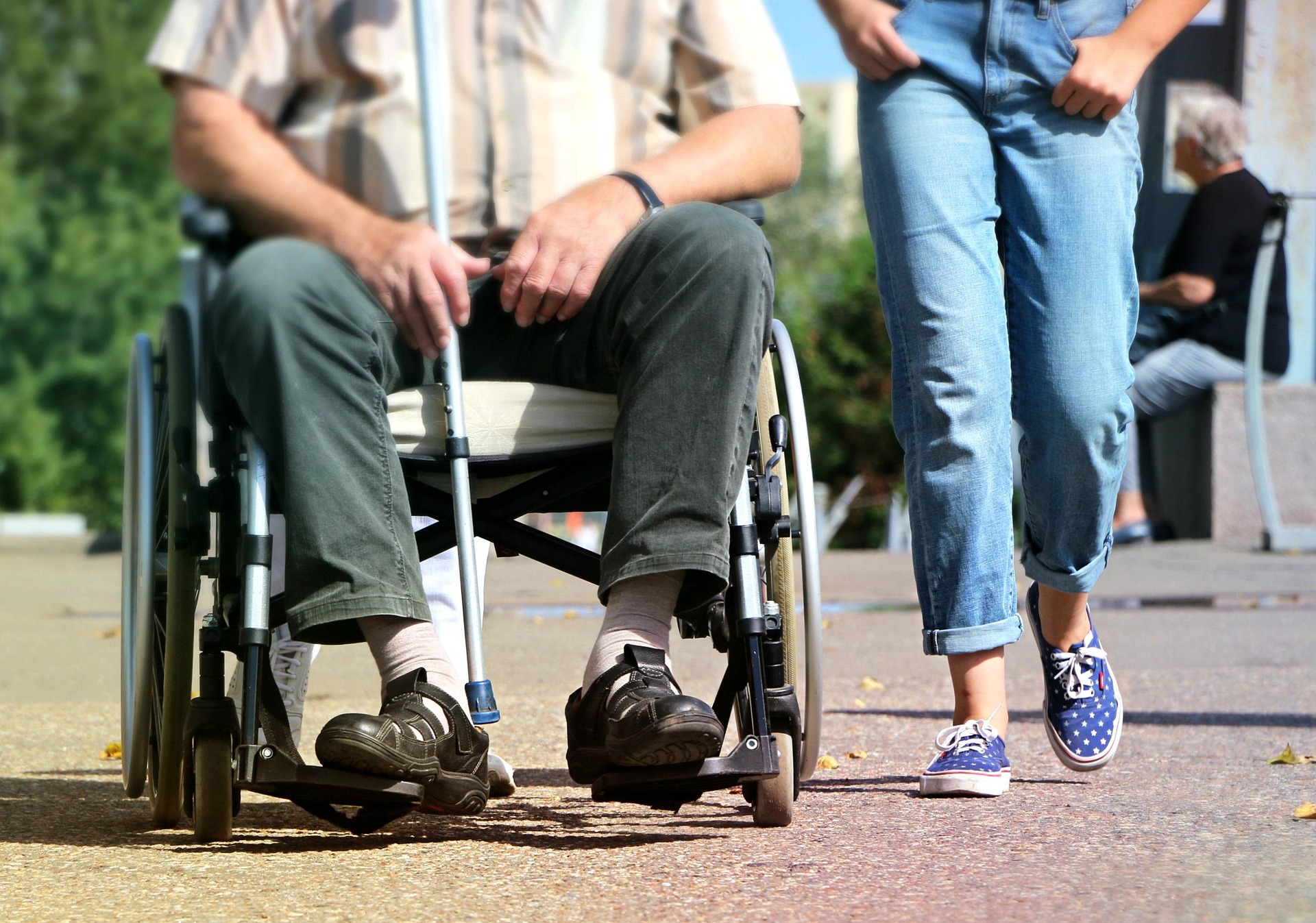 Accessibility means more than just wheelchair accessibility (Photo: Pixabay/svklimkin)
