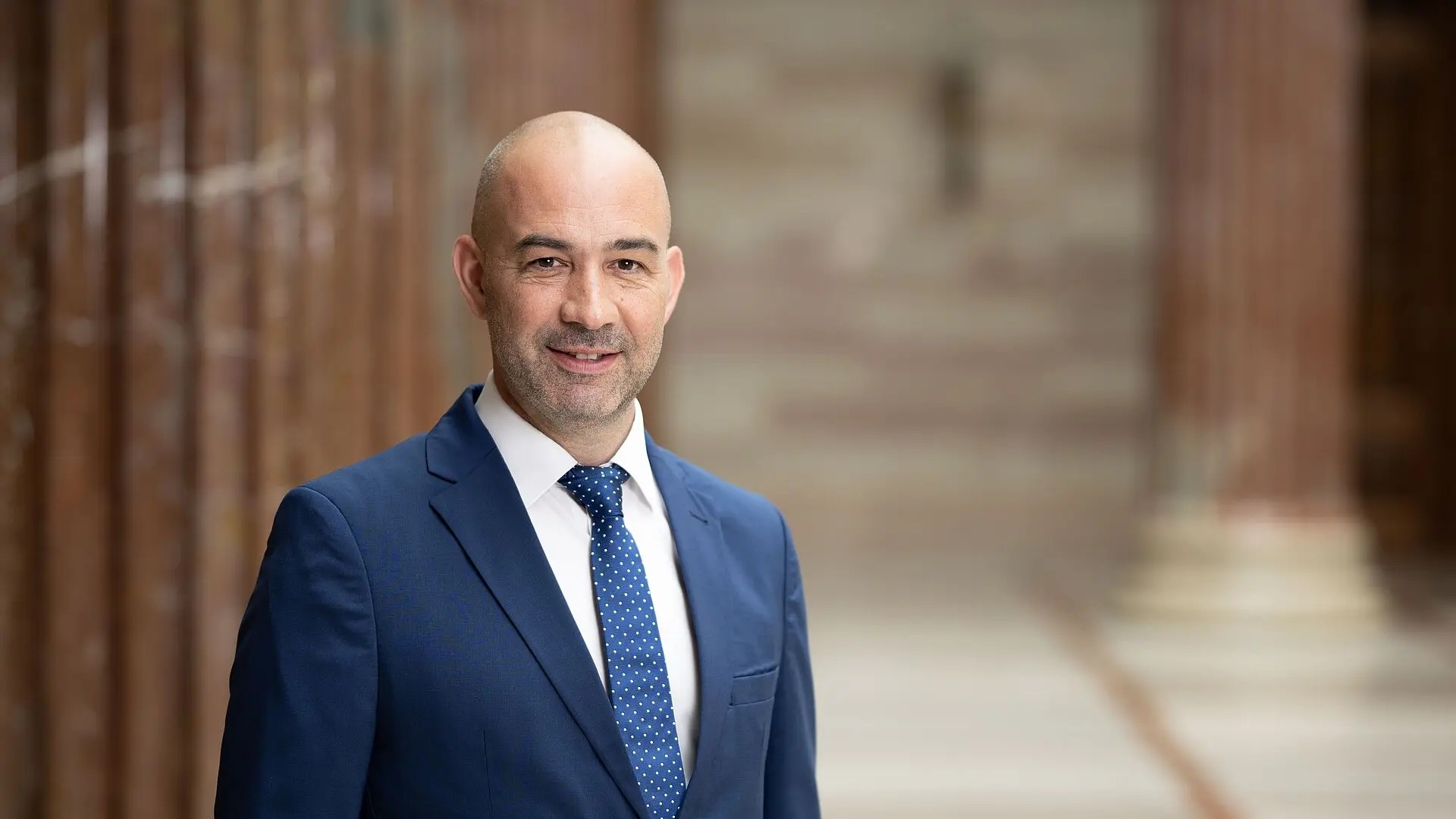
To mark his first year in office as Ombudsperson, Christoph Luisser takes stock and can rightly describe himself as “a true Ombudsperson for the people”. Since taking office on 1 July 2025, Luisser has dealt with 5,797 complaints (3,247 of which relate to the federal administration) and has, in numerous cases, succeeded in bringing about a change of mindset among the authorities, entirely in the interests of those seeking help. The fact that every single complaint lodged must be taken seriously is underlined by the number of justified complaints (1,019). Almost 20 per cent of all complaints within Christoph Luisser’s remit were justified.
“It is very important to me to listen carefully, to take citizens’ concerns seriously and to keep a close eye on the authorities. The high number of complaints received confirms that, from the public’s point of view, the administrative apparatus does not always act correctly,” said Luisser.
Listening to citizens means understanding their concerns and problems
Many citizens still prefer to make a personal visit, as some of them are unable to travel to Vienna or have no other means of communication. The consultation hours held in the regional states are therefore often the only way to get in touch with the Austrian Ombudsman Board.
During more than 200 face-to-face meetings, interested citizens were able to raise their concerns in person and discuss them with Ombudsperson Luisser.
“Citizens have the right to be heard by the state – I give them a voice!” added the Ombudsperson.
Complaints by regional state – Viennese made the most complaints
In addition to monitoring regional authorities, the Austrian Ombudsman Board also oversees the administrative bodies of the regional states and local authorities, with the exception of Vorarlberg and Tyrol. In this context, Christoph Luisser’s department recorded 2,550 complaints regarding the administrative bodies of regional states and local authorities: Vienna (1,917), Lower Austria (203), Upper Austria (146), Styria (108), Burgenland (68), Carinthia (58) and Salzburg (50).
Luisser fights for the rights of the individual
Whether it concerns the threat of development in a nature conservation area, people with disabilities facing discrimination due to unchecked bureaucratic red tape, or pupils, teachers and parents let down by the mayor – the list would go on and on.
However, the case involving little Sophie (13) from the Wiener Neustadt district is particularly heart-wrenching. The schoolgirl fell seriously ill following a COVID infection and has been bedridden ever since. For four years, Sophie was able to sit her exams whilst being home-schooled (a teacher came to her). Now, however, she would suddenly have had to attend school for this, despite a medical certificate stating she is unable to travel. She is, however, exempt from the ‘Digital Literacy’ module due to her illness-related sensitivity to light and noise.
“A seriously ill child is being deprived of her only source of stability in life. In the meantime, we have managed to secure a temporary solution for Sophie. Being able to sit all her exams digitally is a partial victory for us, but not a satisfactory solution. I will continue to fight alongside Sophie until the original in-person home schooling is reinstated,” explained Ombudsperson Luisser.
“A lack of regional support would be disastrous”
Christoph Luisser knows only too well that the biggest concerns and problems are often to be found on one’s own doorstep. A full 44 per cent of all investigations initiated relate to complaints about regional and local authorities.
“Recognising problem areas in the regions is absolutely crucial. In many cases, citizens’ problems, fears and concerns lie right on their doorstep. A lack of support in the regions would be disastrous and would leave many people out in the cold. As Ombudsperson, I guarantee this support – for everyone and at all times!” Luisser concluded.