


The case can also be found in the current Styrian Ombudsman Board report, which was discussed in the Styrian parliament in January. The Ombudsman Board originally drew attention to the issue in a special report back in 2019. "Since then, there have been many discussions and verbal support, some pilot projects are also underway, but employees in so-called 'sheltered workshops' are still being fobbed off with pocket money and they have no chance of building up their own pension provision because they are not covered by pension insurance."
One woman with a disability was forced to take out her own health insurance despite her extremely low income. She received the benefits "Training living for people with disabilities" and "Participation in employment in the world of work" as part of disability assistance. This enabled her to work in an institution for people with disabilities. She received 165 euros in family allowance, the child tax credit of 58 euros and a bonus of 56 euros (participation in employment in the world of work), i.e. a total of 279 euros in income within the meaning of the Styrian Disability Act (StBHG).
Contradiction to the UN Convention on the Rights of Persons with Disabilities (UN CRPD)
She did not have health insurance, so she had to insure herself and pay 114 euros for this. Paradoxically, she would have had health insurance if she had not been working. That is why the authorities advised her to stay at home and not work. Ombudsman Achitz: "This clearly contradicts the UN Convention on the Rights of Persons with Disabilities, which Austria has committed to implementing. People with disabilities have the right to live as self-determined a life as possible, and of course this also includes being able to work."
In its special report, the Austrian Ombudsman Board made the following recommendations to the federal government and all provincial governments:
- Abolish the categorisation of people with disabilities into those able to work and those unable to work (under 50 per cent able to work),
- to create a separate social insurance scheme for people who work in occupational therapy workshops, based on their activities,
- examine new models of remuneration instead of the current "pocket money system".
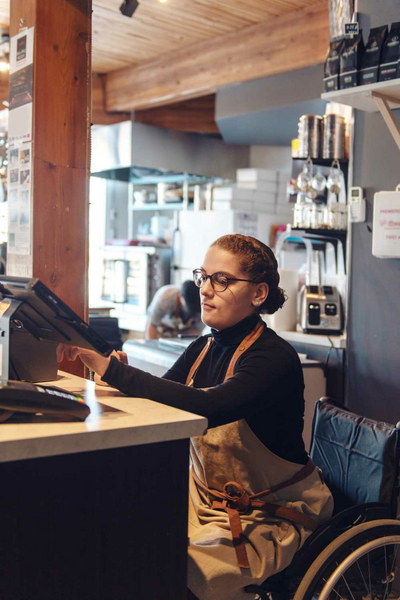 "Unsatisfactory and unacceptable" - this is how the Ombudsman Board describes the situation of people with disabilities on the labour market in its special report.