


"For years, the Austrian Ombudsman Board has been drawing attention to the fact that the care of mentally ill prisoners is inadequate. However, the warnings have been ignored by the Ministry of Justice, while the number of such prisoners is increasing. That is why we focussed on this issue last year. The results are now available. They are alarming: there are too few specialists in psychiatry in the prison system to provide adequate care. As a result, prison guards have to look after these prisoners who are not trained to do so and those affected are often locked away in solitary confinement. In addition to the documented shortcomings, we have numerous recommendations. I appeal to the Ministry of Justice to implement our proposals. Otherwise, tragic cases will be repeated," summarised Ombudswoman Gaby Schwarz at the presentation of the focus report "Mentally ill people: Care in the prison system put to the test".
Dr Reinhard Klaushofer, Head of the Federal Commission for the Execution of Sentences and Measures, emphasises: "The permanent gaps in care and support in the prison system result in systemic human rights violations in dealing with people who have specific care and treatment needs. In particular, the human rights guarantees of the European Convention on Human Rights for the protection of mental and physical health are violated by the existing conditions."
The cases of 59 people affected, including 13 women and 2 juveniles (excluding those in detention centres), were recorded during 17 visits in order to compile the focus report. "It has been shown again: Prisoners with acute severe mental illnesses belong in psychiatric treatment in a hospital," the Ombudswoman states and once again calls for the capacities in hospitals and forensic departments to be expanded for the care of detainees.
"Psychiatric posts often remain vacant for a long time," the Ombudswoman points to the Forensic Therapeutic Centre in Vienna Favoriten, where there was no psychiatrist at all for two and a half years. In the Wr. Neustadt and St. Pölten prisons, there is only one psychiatrist present for four hours a week. For psychiatric care at Vienna-Josefstadt prison with 1,200 inmates, only 18 of 78 hours per week are filled. At Ried prison, a psychiatrist is on site for one day every fortnight. Gaby Schwarz also describes the lack of data exchange between medical professionals as a "major problem": "A psychiatrist can't look at the general practitioner's records. When it comes to changing medication, for example, the specialist staff are reliant on feedback from the inmates. That is negligent."
The Austrian Ombudsman Board recommends the following measures to improve the situation:
- Expand staff capacity for psychiatric care for prisoners.
- Expand training programmes for dealing with mentally ill people.
- Enable data exchange between specialised services.
- Establish occupational therapy programmes in all prisons.
- Provide psychiatrically trained healthcare and nursing staff.
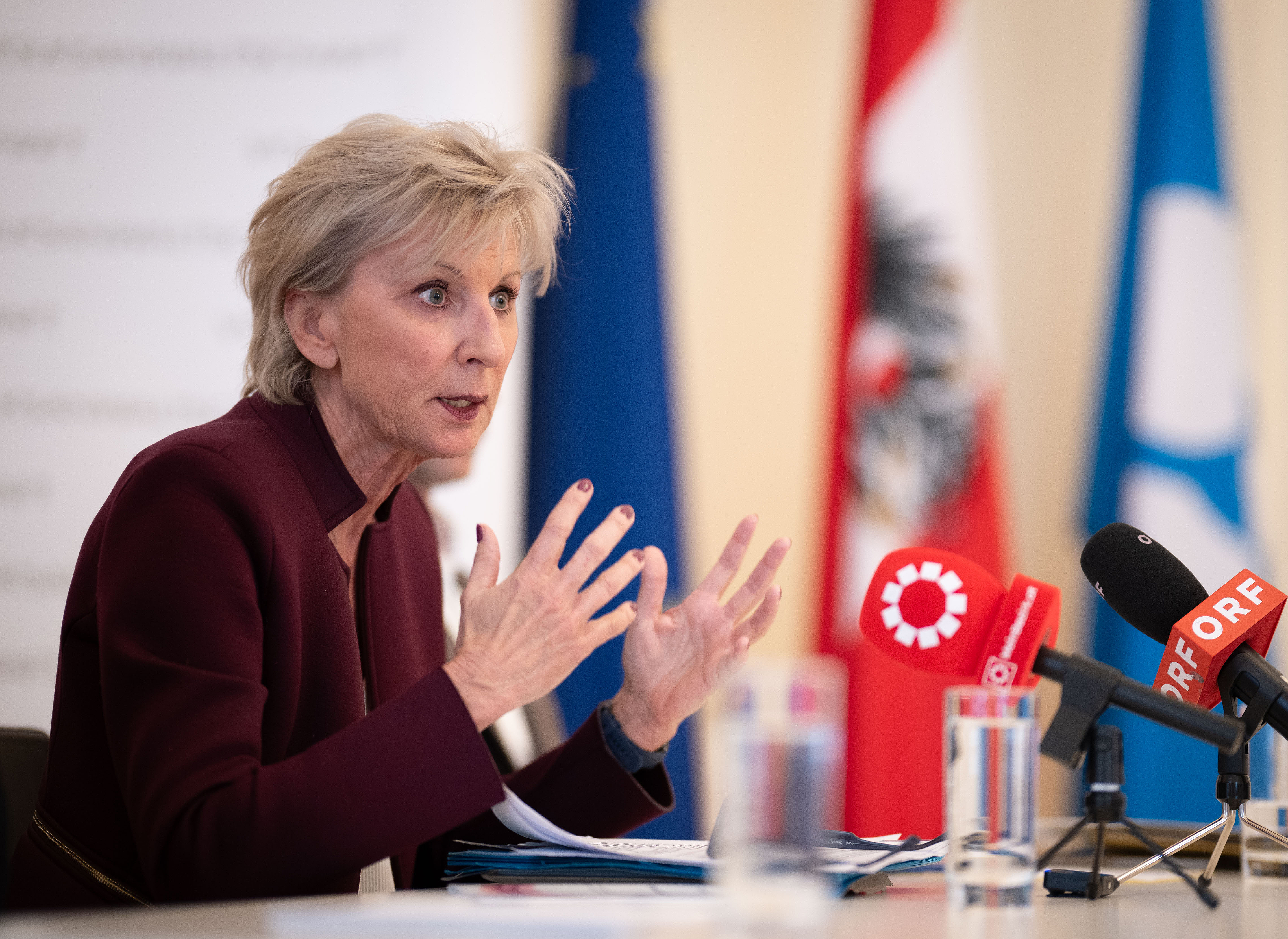 "The results of our focus report are alarming. I appeal to the Ministry of Justice to implement our recommendations", Ombudswoman Gaby Schwarz. (Photo: Austrian Ombudsman Board/Paul Gruber)