


Pedestrians and cyclists no longer dare to use the road because of the drag races, as they are afraid of being run over. Squealing tyres and skid marks on the asphalt, or even burnouts, where cars spin around in circles with smoking tyres, are a daily occurrence. Wedding motorcades simply block the entire street. When the hooligans are asked to be more considerate, they react extremely aggressively, sometimes chasing residents to their front doors and trying to steal their mobile phones. During the first discussion of the problem in ‘Bürgeranwalt’ with the then Ombudsperson Walter Rosenkranz, the district manager of the 10th district stated that the police were unable to improve the situation due to a lack of personnel and demanded more staff for them; the head of MA 46 reported on checks during which number plates were actually removed. Traffic patrols and grid searches were carried out, which increased pressure on the roadrunner scene and helped to calm things down.
However, angry residents demanded once again on the programme that a solution must finally be found, as the situation has not yet improved. The scene is well organised, with lookouts keeping an eye out to see ‘if the coast is clear’ and knowing exactly when checks are taking place. Since the problem was first discussed on ORF, a number of concrete barriers have been erected, which prevent hooligans from parking in some places – but also residents.
Ombudsperson Luisser emphasised that, according to building regulations, a certain number of parking spaces are required for residents, but these no longer exist. Due to an additional new night-time stopping and parking ban, there are de facto no more parking spaces for residents, but instead many open spaces where speeders can let off steam. A second aspect concerns the police. Luisser also criticised a statement made by a police representative at a town hall meeting in early November 2025, according to which the police have a priority ranking and noise pollution is not the top priority. He showed photos that had been leaked to him of cars that had crashed into lampposts or trees. One speeder even crashed into the front garden of the district administrator. ‘This is no longer just a noise problem, but rather a total loss of control and multiple failures on the part of the authorities. When a car brakes three centimetres in front of a mother with her children, it's no longer a noise problem,’ Luisser said on ORF. The Ombudsperson also referred to the police's monopoly on the use of force and security in Austria. Citizens have a legal right to safety: ‘You call the police, and they simply don't come – or they don't come for hours. That's not acceptable. It's a latent violation of the law.’ One solution proposed by MA 46 is speed bumps, although even here, a vehicle travelling between two speed bumps has been calculated to reach a speed of 115 km/h in a 30 km/h zone. One possible solution proposed by the Ombudsman's Office is automated access control. To this end, the Ministry of Transport must lay the groundwork with an amendment to the Road Traffic Regulations, according to Christoph Luisser: ‘District Mayor Markus Franz has announced in the media that he wants to turn the pedestrian zone in Favoriten into a climate boulevard. I would like Filmteichstraße to become a super neighbourhood again, where residents can live in peace!’
Follow-up: Fair opportunities for medical entrance examinations
A young man from Vorarlberg had not passed his school-leaving examination, but took the university entrance examination in order to be able to study. He was admitted to the medical school entrance exam at MedUni Innsbruck, but was not allocated to the 75 % of places reserved for applicants with an Austrian school leaving certificate, but to the 20 % of places reserved for applicants from EU countries. His chances were therefore not 1:3, as was the case with the Austrian quota, but 1:20. He considered this to be objectively unjustified unequal treatment and complained to the Ombudsman Board.
The Ombudsman's Office agreed with his view and proposed a corresponding amendment to the University Act to the legislature, which was passed by the National Council and the Federal Council in October 2025. 75% of all study places are now reserved for holders of school-leaving certificates issued in Austria and relevant university entrance qualifications. Unfortunately, the change came too late for the Vorarlberg applicant who originally complained to the Ombudsman's Office; he has since changed his career path. ‘For all other holders of university entrance qualifications who wish to apply for a place to study medicine in the future, the Ombudsman's Office has brought about a significant improvement in their chances,’ says Ombudsperson Christoph Luisser.
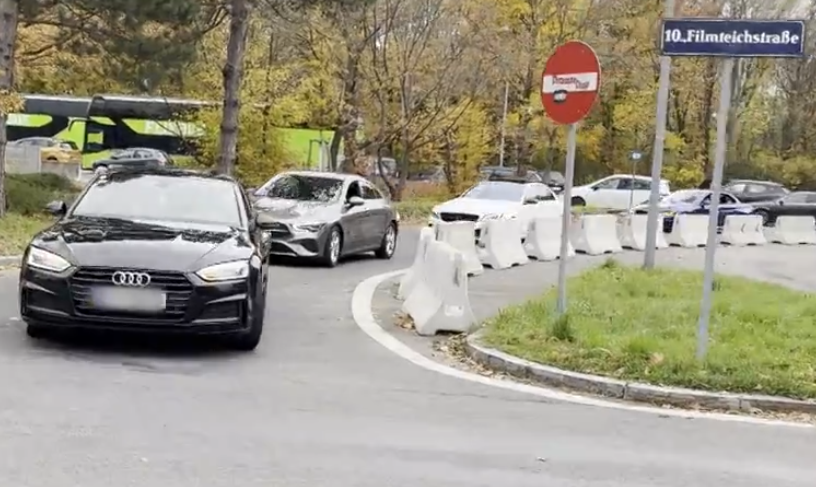 Raserszene in Wien-Oberlaa Bildrecht: ORF/Privat