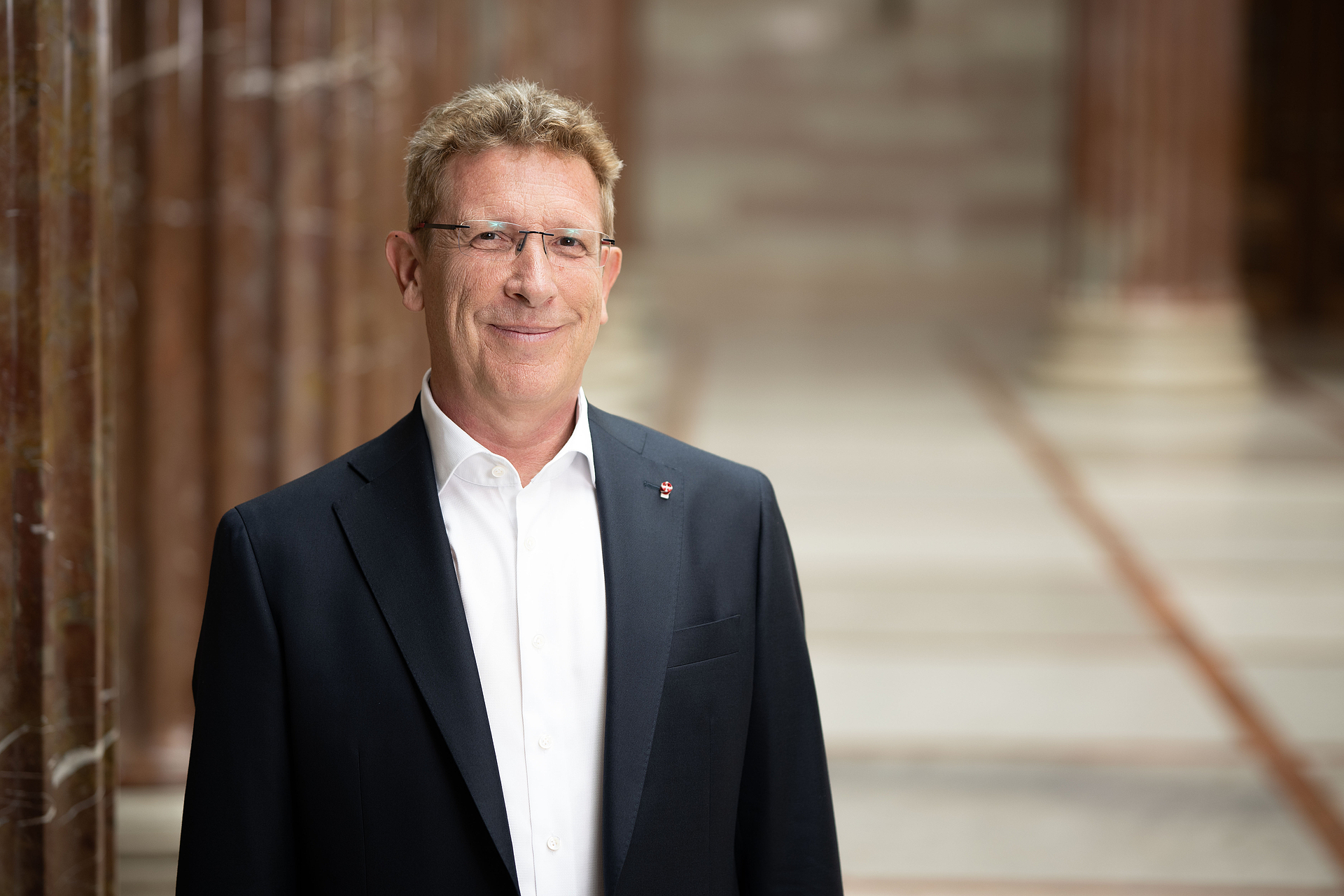
As part of the Universal Periodic Review (UPR), the UN Human Rights Council regularly reviews the human rights situation in all member states - including Austria. The Austrian Ombudsman Board, as the human rights centre of the Republic, is also involved in this state review and has submitted a report to the UN Human Rights Council. "In addition to perennial issues such as the lack of de-institutionalisation in the area of disabilities, this time the situation of refugee children is a major topic, which Austria is not taking care of as children's rights would require," says Ombudsperson Bernhard Achitz.
The Austrian Ombudsman Board participates in the UPR on the basis of the Paris Principles of the United Nations Human Rights Council (UN). Human rights institutions that fulfil all criteria are awarded A status by the UN Human Rights Council. The Austrian Ombudsman Board has A status and thus the right to participate in meetings of the UN Human Rights Council. It works together with civil society and NGOs and participates in the UN's state reviews.
State custody necessary for refugee minors from day one
In its latest report, the Austrian Ombudsman Board calls for higher daily rates for institutions that care for unaccompanied minor refugees (UMF). Achitz: "Foster children and refugee children should not be treated differently." The Ombudsman Board is also in favour of a nationwide standardised custody procedure for refugee minors. Achitz: "It would make sense for child and youth welfare services to take over the custody of unaccompanied refugee children as soon as they arrive in Austria. Of course, this also requires appropriate funding." When the Common European Asylum System (CEAS) comes into force in June 2026, the assumption of "representation" for unaccompanied children will be mandatory under European law.
Even dedicated staff cannot make up for underfunding
As part of their mandate for preventive human rights monitoring, the commissions of the Austrian Ombudsman Board visit not only prisons, retirement and care facilities and facilities for people with disabilities, but also facilities for unaccompanied minors. They regularly find that the care provided in many facilities is very questionable from a human rights perspective. "The staff are often very committed, but even the most hard-working employees cannot change the structural conditions and underfunding," says Achitz.
Higher care requirements, less money
Depending on the facility and federal state, only half the daily rates are paid for the care of refugee children compared to shared child and youth welfare centres. It is clear that the same level of work cannot be provided with these lower budgets. Achitz: "This is unacceptable, especially when you consider that the daily rates in the child and youth welfare sector are considered absolutely necessary in order to provide meaningful, human rights-compliant care that is orientated towards the best interests of the child."
The situation is particularly bad in mass accommodation centres with 60 or more places, which are also approved for the care of children from the age of six and up to 21. Such an environment is neither contemporary nor in line with human rights. Even representatives of the authorities admit that these types of accommodation are not suitable, especially for children under 14. "Refugee children often need particularly intensive care if they are traumatised by their flight. But they have hardly any access to therapy or intensive educational settings," criticises Achitz.
People with disabilities: lack of plans and money for de-institutionalisation
In the area of people with disabilities, the Austrian Ombudsman Board is calling for all those responsible at state and federal level to work together to develop a binding strategy for de-institutionalisation in line with the UN Convention on the Rights of Persons with Disabilities (UN CRPD). "People with disabilities have the right to live as independently as possible, which also includes the freedom to choose their place of residence. However, the federal and state governments have not presented any concrete plans for a strategy or a timetable, nor has any money been made available for this. And again and again one gets the impression that the federal states do not feel bound by the UN CRPD because it was signed by the federal government and not by themselves," criticises Ombudsperson Achitz.
Download the shadow report of the Ombudsman Board to the UN Human Rights Council: https://volksanwaltschaft.gv.at/fileadmin/user_upload/AOB_Shadow_Report_UPR_4_Cycle_Final_bf.pdf
UPR monitoring tool
In a scientific co-operation, the Austrian League for Human Rights and the Austrian Ombudsman Board have developed an online monitoring tool that shows with just a few mouse clicks where Austria is falling short in terms of human rights. And it shows that there is an enormous need for action.