


On 25 September, the Ombudsman Board's report on preventive human rights monitoring was on the agenda of the Lower Austrian state parliament. "Unfortunately, the Ombudsman Board was once again not invited to present the report during the session and discuss it with the members of parliament, as is customary in the other federal provinces," regrets Ombudsperson Bernhard Achitz: "This report also contains recommendations on how old people's homes, youth hostels and residential facilities for people with disabilities should be run in accordance with human rights. The provinces are primarily responsible for these facilities, partly as operators, but certainly for supervision. It would be correspondingly important if state politics were to deal with this more intensively - and also demonstrate this by inviting the Ombudspersons."
The report on preventive human rights monitoring is addressed to Parliament and all provincial parliaments - and indeed to all provinces equally, as the recommendations are aimed at institutions throughout Austria. However, it also deals with special observations made by the Ombudsman Board's monitoring commissions in the institutions of individual provinces. Some examples that concern Lower Austria:
- Psychiatric care in retirement and nursing homes: in some regions, specialist care is so extremely strained that new patients are no longer accepted or no on-site care is offered in nursing homes. The state of Lower Austria confirmed the criticism that the free choice of doctor is impaired by the location and lack of willingness of doctors to make home visits. Such gaps in care can lead to residents being transferred to hospitals. There is also a lack of mobile psychotherapy services. One care home manager stated that he had searched in vain for such mobile services for residents suffering from severe depression in Lower Austria: "There is no one in the district who offers (mobile) psychotherapy or clinical psychological treatment." (from page 46)
- "Penalties" for people with disabilities who want to spend the weekends with their family: There are absence regulations in residential facilities - those affected may only have a certain number of days of absence, otherwise they have to pay a "penalty" to the facility for each additional day of absence. If someone regularly wants to spend the weekends with their family, this becomes unaffordable. Ombudsperson Achitz: "Austria has committed itself to implementing the UN Convention on the Rights of Persons with Disabilities. People with disabilities must be able to make decisions about their lives as independently as possible. Just like other people, they have the right to spend their weekends in their own home, i.e. the institution, or with their relatives." (from page 123)
Download Report of the Austrian Ombudsman Board - Preventive human rights monitoring volume: https://volksanwaltschaft.gv.at/fileadmin/user_upload/Downloads/Berichte/NR/PB-48-Pr%C3%A4ventiv_2024_bf.pdf
Keyword: Preventive human rights monitoring
The Austrian Ombudsman Board has the constitutional mandate to scrutinise public and private institutions in which people are or may be restricted in their freedom in order to protect and promote human rights. In addition to prisons and police facilities, this also includes hospitals, retirement and nursing homes, child and youth welfare facilities, facilities for underage refugees, residential homes and workshops as well as day centres for people with disabilities.
The aim of preventive human rights monitoring is to draw attention to general conditions that can lead to human rights violations. Institutions are supported in focussing on precautions and measures to prevent human rights violations.
Multidisciplinary commissions of the Austrian Ombudsman Board inspect around 500 institutions per year, in the vast majority of cases unannounced, without any specific cause and independent of complaints. This is based on two United Nations conventions: the Optional Protocol to the United Nations Convention against Torture and Other Cruel, Inhuman or Degrading Treatment or Punishment (OPCAT) and the UN Convention on the Rights of Persons with Disabilities.
https://volksanwaltschaft.gv.at/fuer-menschenrechte/
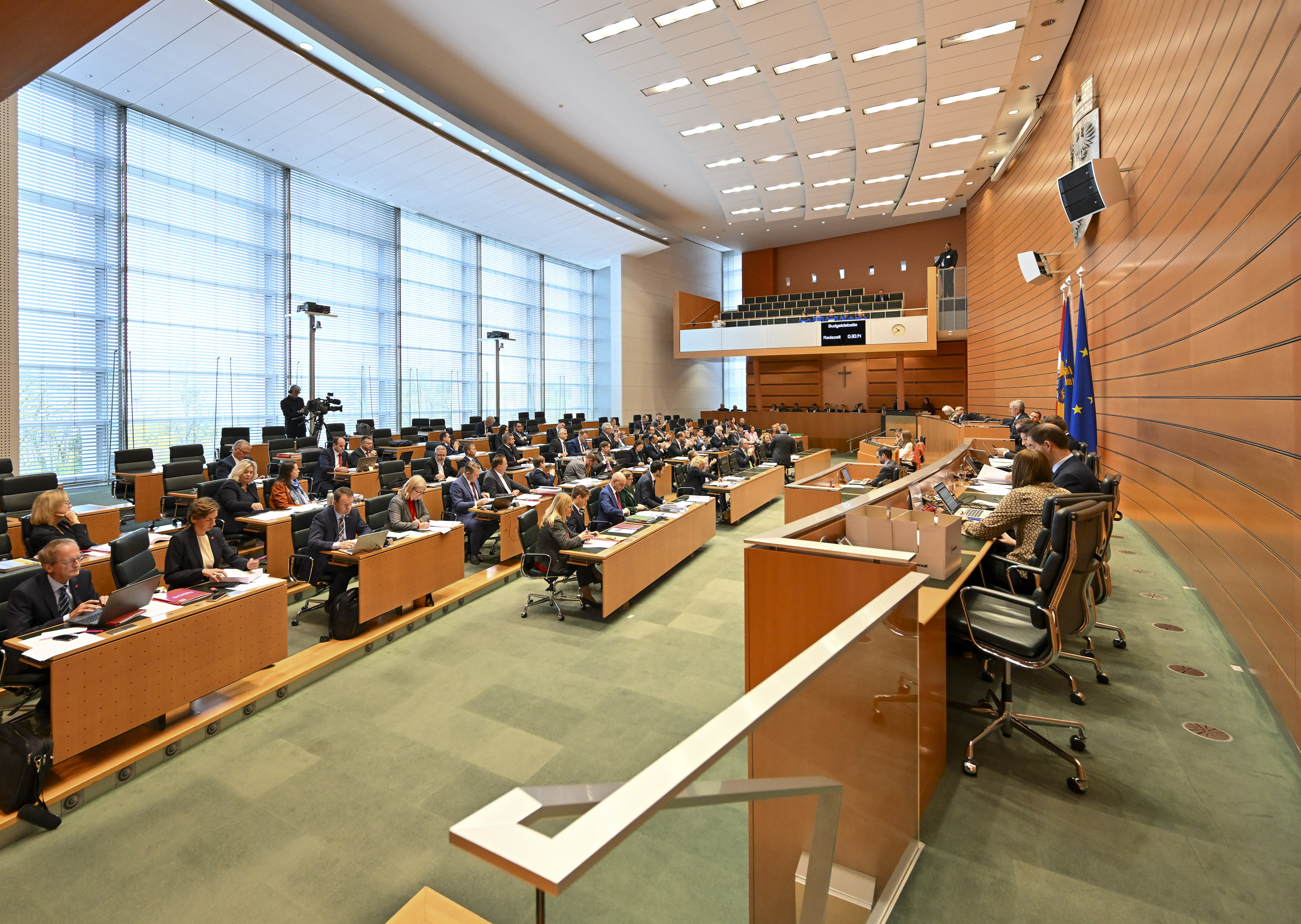 The Ombudsman Board's human rights report is particularly relevant for state politics, including in the Lower Austrian state parliament (Photo: NLK/Pfeffer)