


"If the follow-up care does not work, the success of the treatment is at risk," said Ombudsman Bernhard Achitz at a press conference on 11 March 2026. If treatment is discontinued, the patient's condition deteriorates and they soon have to be treated in hospital again - known as "revolving door psychiatry". Some patients have to stay in hospital longer than necessary due to a lack of care services, such as specialised residential groups.
Commissions visited 56 psychiatric wards
The Austrian Ombudsman Board and its commissions (together with the National Preventive Mechanism NPM) have therefore launched an audit focus on the topic of "discharge management". The survey criteria were developed together with the Human Rights Advisory Board (MRB) and the Institute for Empirical Social Research (IFES). In 2024 and 2025, the commissions then visited 56 inpatient psychiatric departments across Germany: 13 departments for child and adolescent psychiatry (KJP), one department for transitional psychiatry (TP), 36 departments for adult psychiatry (EP) and 6 departments for geriatric psychiatry (GP).
The commission members asked the staff and management team about the clear and efficient organisation of documentation and information flows. Patients were asked about their satisfaction and their assessment of empowerment.
A third are discharged from psychiatry at the wrong time
"Almost a third of all patients are not discharged from psychiatric wards at the right time," criticises Ombudsman Achitz. Around 69% of patients are discharged at the appropriate time from a medical specialist's point of view, around 18% later than medically indicated and around 13% earlier than medically indicated.
Premature discharges can lead to patients having to be readmitted very soon. Delayed discharges not only mean increased costs for those affected, but also longer waiting times for other patients who would urgently need a hospital place.
The reason for a later discharge than medically indicated is often that no suitable care option is available elsewhere (very often 35% and often 56%).
Precarious situation, especially in rural areas and in paediatric and adolescent psychiatry
The care situation in paediatric and adolescent psychiatry has been precarious for years. Due to a lack of staff, beds had to be closed in the department at the Hietzing Clinic, for example. In Burgenland, there was no separate ward for children and adolescents at all. There is also a serious care gap in the treatment of people with eating disorders such as anorexia, especially for - mostly female - adults, pointed out psychologist and Diakonie social expert Martin Schenk. There is also a lack of nursing home places for chronically mentally ill elderly patients and places in rehabilitation clinics. The situation is also particularly precarious for homeless psychiatric patients. In principle, care in large cities is better than in rural areas, said Schenk, who is also a member of the Human Rights Advisory Board of the Austrian Ombudsman Board. "Unfortunately, there is nothing to suggest that the federal states are pursuing systematic strategies to use data to determine exactly what is missing and to close the gaps," laments Achitz: "We need care research that takes into account the needs of the chronically mentally ill. And which is based on the current state of knowledge in sociology, psychiatry and psychotherapy."
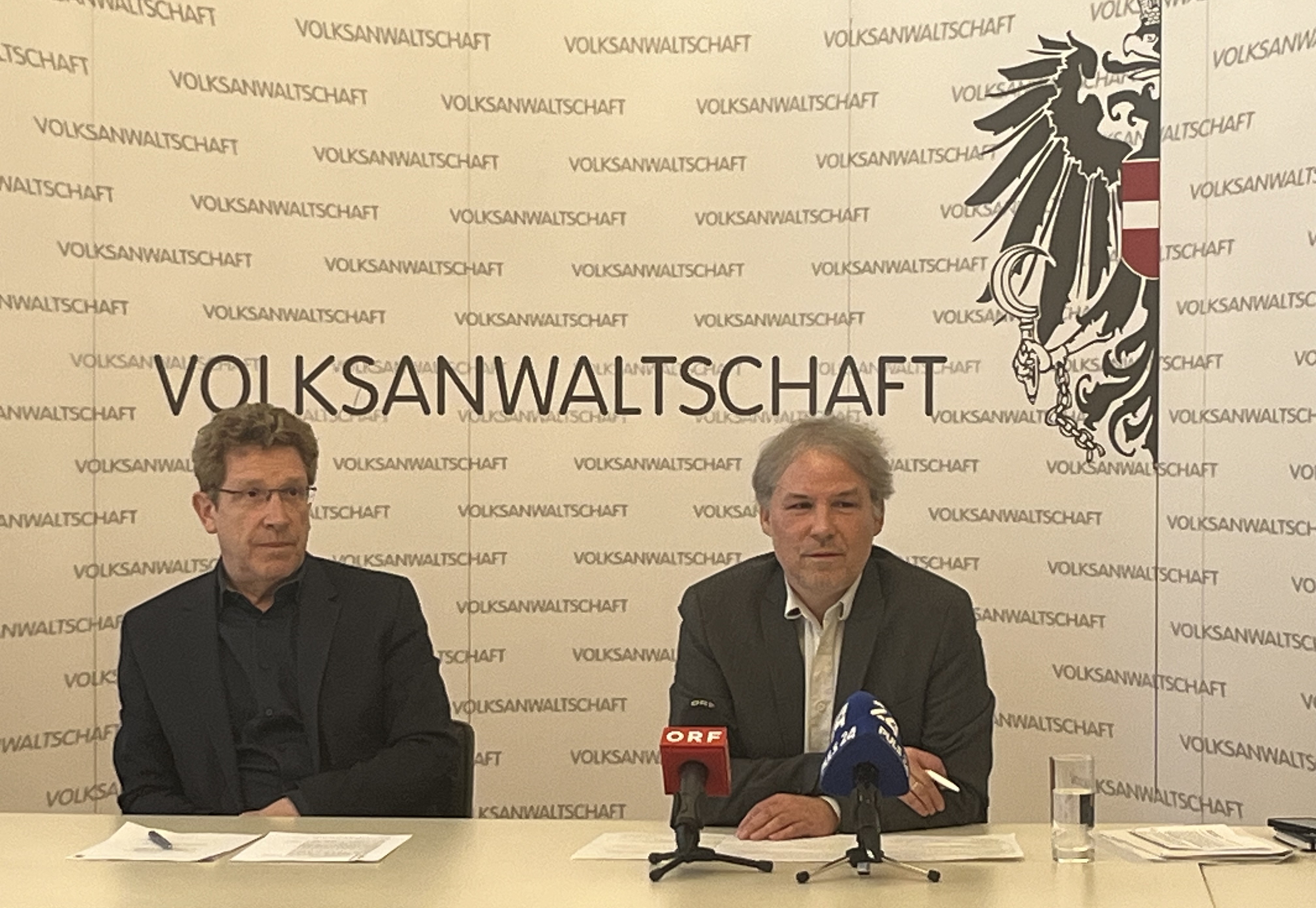 A third of psychiatric hospital patients are discharged at the wrong time. This was revealed during an Ombudsman Board audit focussing on discharge management.