


The City of Vienna responded to a request for comment from the Austrian Ombudsman Board by stating that the establishment of school streets would pursue several objectives, including that parents would no longer take their children to school by car; that there would be no shift in the concentrated stopping and dropping off of children by parents; and ultimately that this would also increase safety on the way to school. From 7.30 am to 8.00 am, it would also not be possible for neighbours to drive on school roads. Safety interests would take precedence over the "interests of traffic" in the unhindered use of school roads.
All school roads in Vienna were established on the basis of § 43 Para. 1b of the Austrian Road Traffic Regulations (StVO); access is therefore only possible on application as an individual permit. However, with the insertion of Section 76d in the StVO, the legislator generally authorised access for residents: the legislator wanted to safeguard their rights to drive into and out of a school road.
"In the opinion of the Austrian Ombudsman Board, a change from the old to the new regulation would have been necessary, but the City of Vienna would then have had to decree all school roads again on the basis of the new regulation," explains Elisabeth Schwetz, the Ombudswoman responsible. According to the Ombudsman Board's interpretation, retaining the old regulation would at least have had to be objectively justified, which the City of Vienna did not do either. "The City of Vienna has therefore neither switched to the new regulation of school streets in accordance with § 76d, nor has it objectively justified its insistence on the regulation of school streets in accordance with § 43 Para. 1b of the StVO. The Austrian Ombudsman Board has therefore identified maladministration here," concludes Ombudswoman Schwetz.
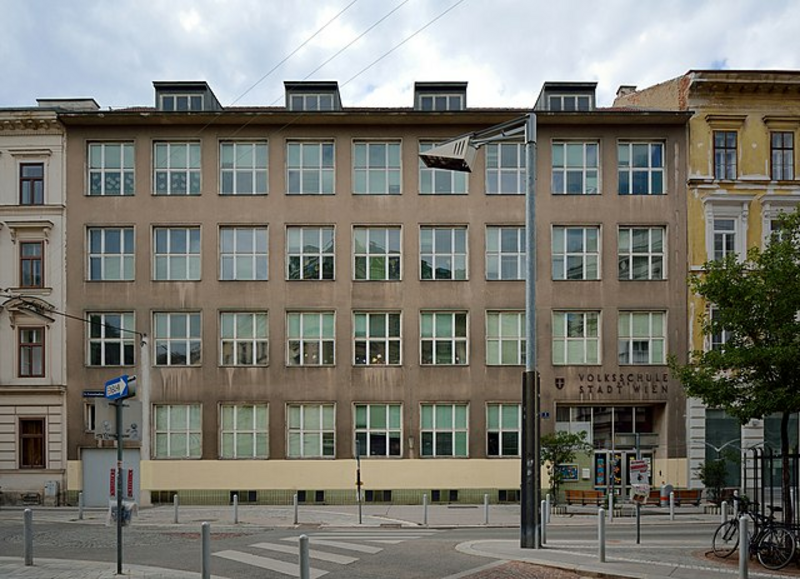 Primary school Czerninplatz Vienna Photo (c) Wikimedia Commons/Peter Haas